Let’s be honest about something upfront:
Xylitol works.
The research backs it. Dentists recommend it. And if you’ve been using it consistently after meals, you’re already ahead of most people when it comes to oral health.
But here’s what nobody tells you when you’re trying to figure out how much xylitol you actually need:
Dosage matters more than most people realize. Too little won’t move the needle. Too much can cause uncomfortable side effects. And getting it just right requires understanding what the research actually says — not what marketing claims suggest.
Let’s break down exactly how much xylitol you need daily, how to use it effectively, and what realistic results you can expect.
"Xylitol clears the battlefield. But what repopulates it with the right bacteria? See the breakthrough approach here."
Access the Protocol →
The Research-Backed Xylitol Dosage
Here’s the bottom line from decades of clinical studies:
5-10 grams of xylitol daily, divided into 3-5 separate uses.
That’s the sweet spot where research consistently shows measurable oral health benefits:
- Significant reduction in cavity-causing bacteria (Streptococcus mutans)
- Decreased plaque formation
- Improved remineralization of early enamel damage
- Fresher breath that lasts longer
- Healthier gum tissue over time
Less than 5 grams daily? Results become inconsistent. The bacterial reduction isn’t significant enough to create lasting change.
More than 10 grams? You’re not getting additional oral health benefits — but you might experience digestive discomfort (more on that below).
The key insight most people miss: frequency matters more than total amount.
Three doses of 2 grams throughout the day will outperform a single 6-gram dose. Consistent exposure is what disrupts harmful bacteria effectively.
What if one simple daily habit could deliver what 5 doses of xylitol gum can’t? Discover the missing piece.
Why Xylitol Dosage Works This Way
Xylitol isn’t like brushing your teeth once and calling it good for the day.
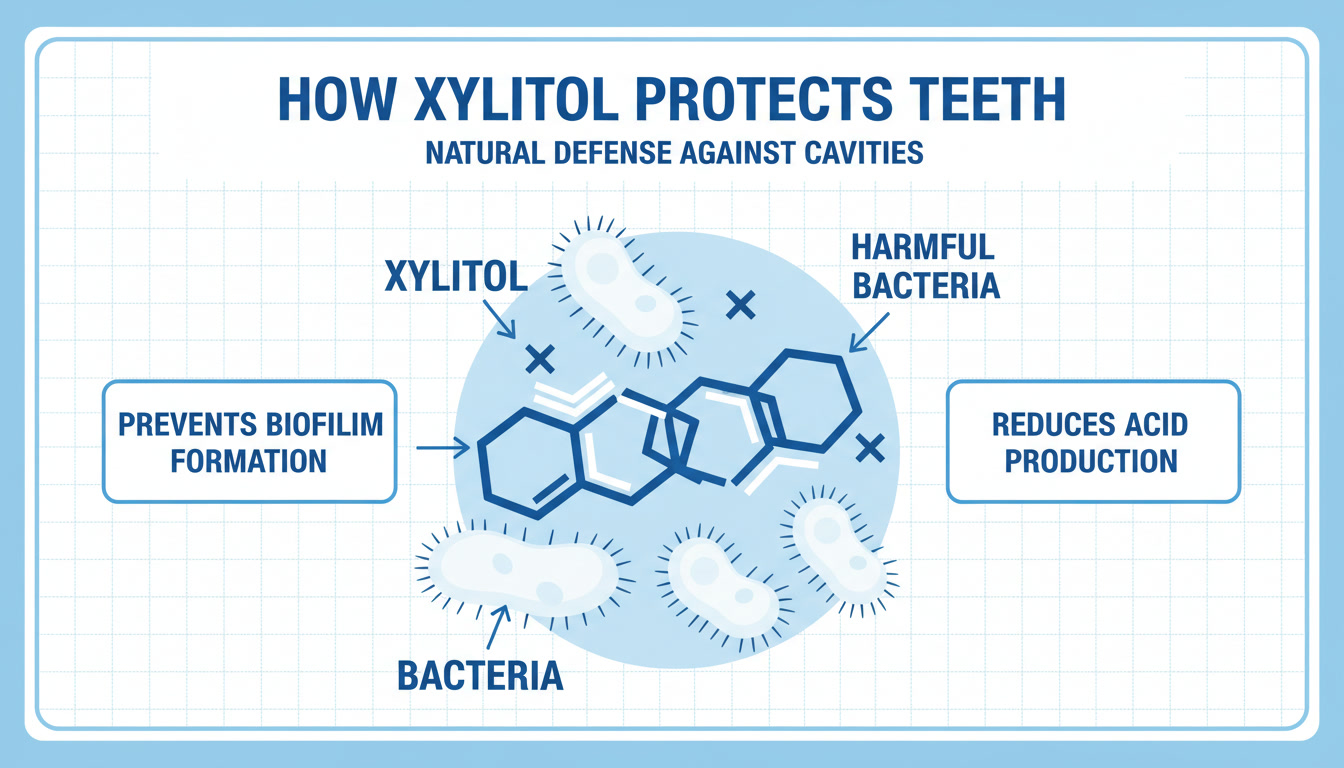
It works through continuous bacterial disruption. Here’s what happens at the cellular level:
When cavity-causing bacteria (primarily Streptococcus mutans) try to consume xylitol, they can’t ferment it for energy. They waste metabolic resources trying to process something they simply cannot use.
This weakens them. Over time, with repeated xylitol exposure throughout the day, their populations significantly decrease.
But here’s the catch: if you only expose bacteria to xylitol once daily, they have 23 hours to recover and multiply. That single dose isn’t enough sustained pressure to create meaningful population decline.
Multiple exposures throughout the day — especially right after meals when bacteria are most active — keeps the pressure constant. That’s when real, measurable change happens.
This is why the 3-5 uses daily guideline exists. It’s not arbitrary. It’s based on how bacterial populations respond to sustained xylitol exposure over time.
"The dosage that dentists don't tell you about isn't measured in grams—it's measured in bacterial balance. Learn more."
Access the Protocol →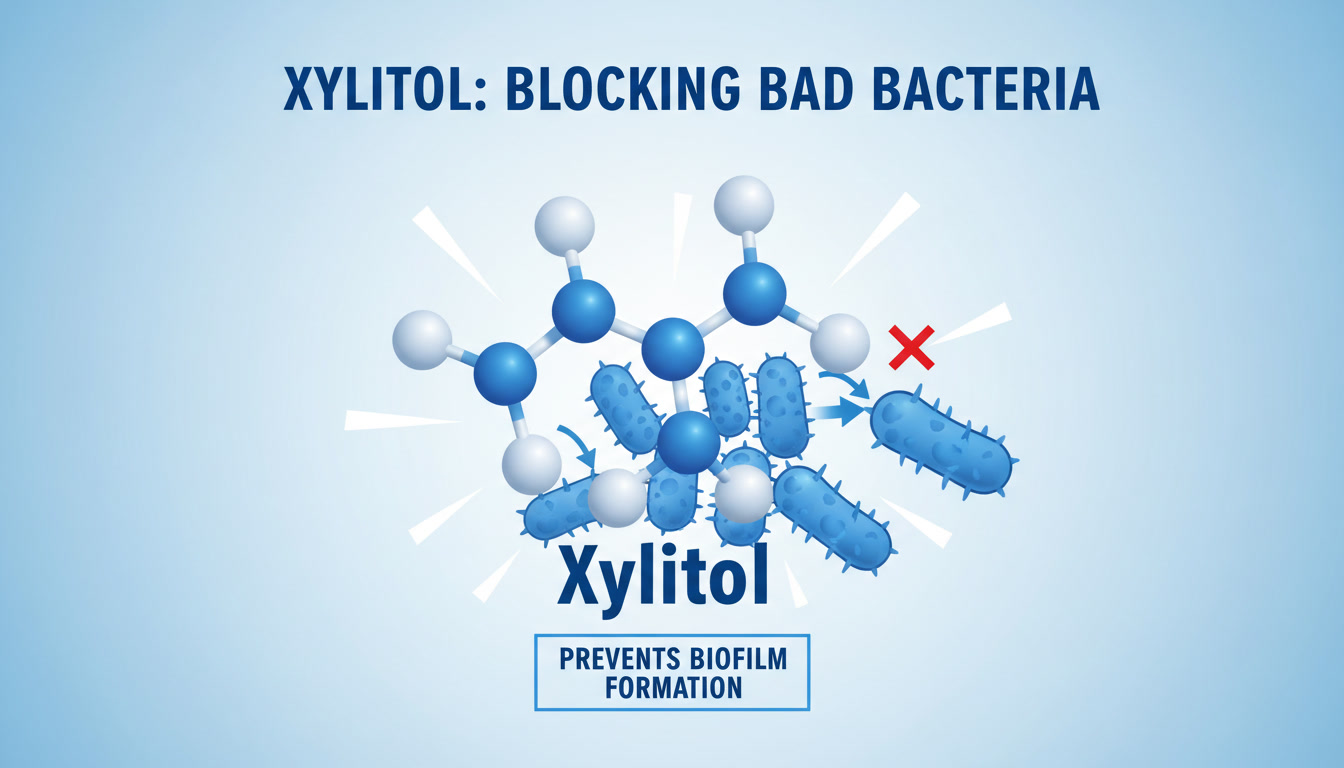
How to Take Xylitol: Practical Dosage Guidelines
Now let's get tactical. Here's exactly how to hit that 5-10 gram daily target effectively:
Xylitol Gum (Most Popular)
- Dosage per piece: 1-2 grams
- Daily Intake: 3-5 pieces
- Timing: After every meal and snack
- Duration: Chew at least 5 minutes
Xylitol Mints
- Dosage per mint: 0.5-1 gram
- Daily Intake: 5-10 mints
- Timing: Between meals / After coffee
- Usage: Dissolve slowly; do not crunch
Granulated Xylitol
- Dosage: 1-2 teaspoons
- Total Weight: 4-8 grams total
- Usage: Dissolve in coffee, tea, or water
- Frequency: Split into 2-3 separate uses
Xylitol Toothpaste
- Dosage: Variable concentration
- Usage: Brush as normal, twice daily
- Status: Supplemental only
"Researchers found something surprising: the people with the freshest breath weren't using more xylitol. They were using this."
Access the Protocol →The Timing That Matters Most
Not all xylitol uses are equally effective. Here’s when to prioritize your doses:
#1 Priority: Immediately After Meals
This is when harmful bacteria are feeding on food particles and producing the most acid. Xylitol disrupts this process right when it matters most.
#2 Priority: After Sugary or Acidic Foods/Drinks
Coffee, soda, fruit juice, desserts — these create the most hostile environment for your enamel. Xylitol immediately after helps neutralize the damage.
#3 Priority: Before Bed
Bacteria multiply fastest while you sleep (when saliva production drops). A final xylitol dose before bed gives you protective coverage during those vulnerable hours.
Avoid: Taking all your xylitol at once in the morning and thinking you’re covered for the day. That’s not how bacterial disruption works.
Xylitol Dosage Side Effects: What to Expect
Xylitol is safe for the vast majority of people. However, to maintain the 2026 Protocol, observe the following considerations:
Digestive Discomfort
When you first start using xylitol — or if you consume too much too quickly — you may experience:
- ● Bloating & Gas
- ● Mild stomach cramping
- ● Loose stools
Individual Thresholds
Tolerance is highly individualized. While some tolerate 15g+, others plateau earlier.
Note: Oral health benefits do not increase significantly past 10g. Listen to your body and adjust accordingly.
CRITICAL WARNING FOR PET OWNERS
Xylitol is EXTREMELY TOXIC TO DOGS. Even trace amounts can cause severe hypoglycemia, seizures, liver failure, and death. Store all products in secure high-access areas. If accidental ingestion occurs, seek emergency veterinary care immediately.
How Long Until You See Results?
This is one of the most common questions — and the answer depends on what you’re measuring.
Within 1-2 weeks:
- Noticeably fresher breath that lasts longer between brushing
- Teeth feel smoother, less fuzzy coating throughout the day
- Less plaque buildup
Within 3-4 weeks:
- Measurable reduction in cavity-causing bacteria populations
- Improved gum tissue appearance (less redness, less bleeding when brushing)
- Enhanced saliva production becomes noticeable
Within 2-3 months:
- Significant bacterial population shifts (some research suggests this can become permanent with continued use)
- Dentist-visible improvements in plaque levels and gum health
- Stronger enamel as remineralization accumulates over time
The key: Consistency beats intensity. Using 5 grams daily for 90 days will deliver far better results than using 15 grams sporadically for a few weeks.
The Bottom Line
The research-backed xylitol dosage is clear: 5-10 grams daily, divided into 3-5 separate uses, with priority timing after meals.
Used this way, xylitol is one of the most effective tools available for reducing cavity-causing bacteria, supporting enamel remineralization, and maintaining fresher breath naturally.
Start gradually if you’re new to xylitol. Be consistent rather than sporadic. And prioritize frequency over total amount.
But if you’re serious about transforming your oral health — not just managing it — xylitol is the starting point, not the complete solution.
The most dramatic, lasting results come from combining xylitol with the probiotic support your mouth needs to maintain balance naturally and permanently.
Ready to see what that complete approach actually looks like?