
Morning breath affects 9 out of 10 adults, yet most people don’t understand why it happens or when it signals a deeper health issue. If you’ve noticed your breath is significantly worse upon waking—even with good oral hygiene—you’re not alone, and there’s a scientific explanation.
The difference between normal morning breath and chronic halitosis often comes down to what’s happening in your mouth during those 7-8 hours of sleep. Understanding this process can help you identify whether your morning breath is simply a normal biological response or a sign that something needs attention.
What Causes Morning Breath? The Science Behind the Smell
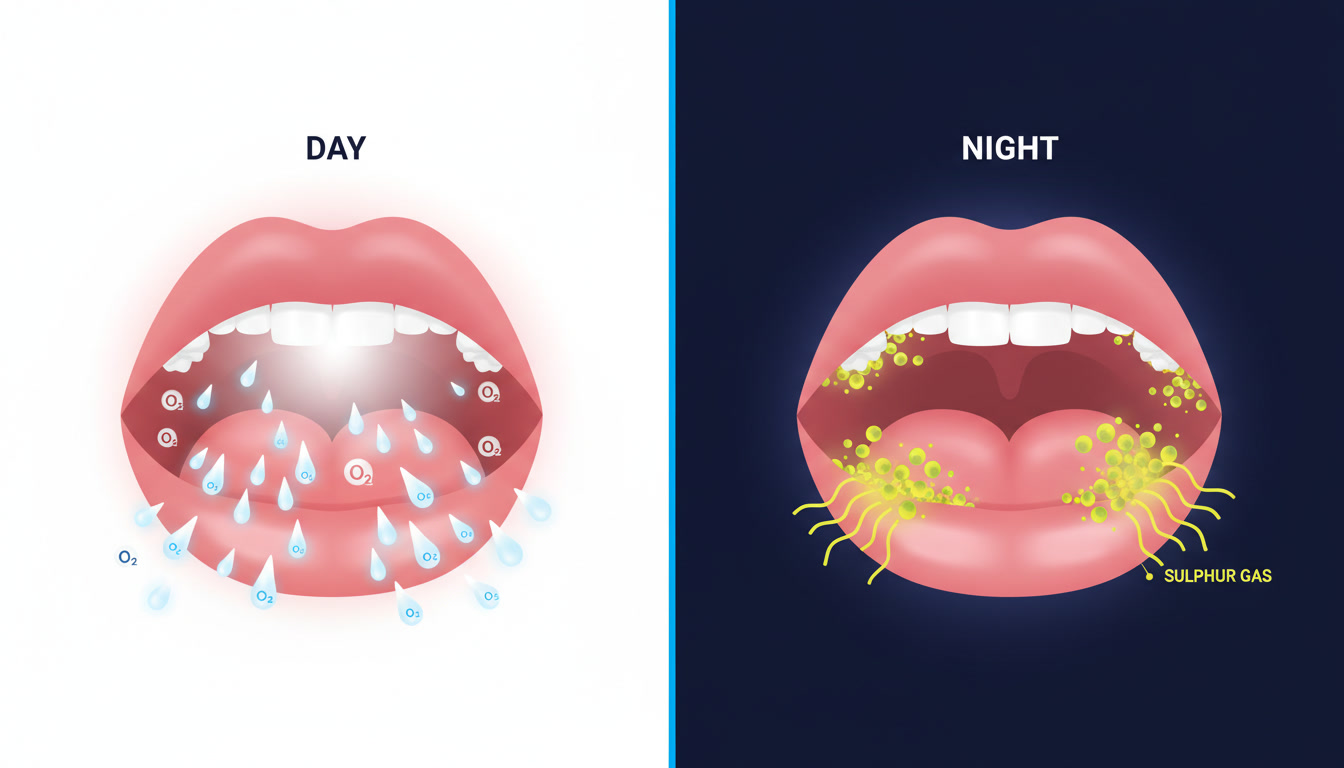
Morning breath, clinically known as “nocturnal halitosis,” occurs due to a combination of reduced saliva production and bacterial activity during sleep. While eating throughout the day introduces food particles and various odors, your mouth actually becomes a more hospitable environment for odor-causing bacteria at night.
Here’s what makes the overnight period unique:
Hour 1-2: The Saliva Shutdown
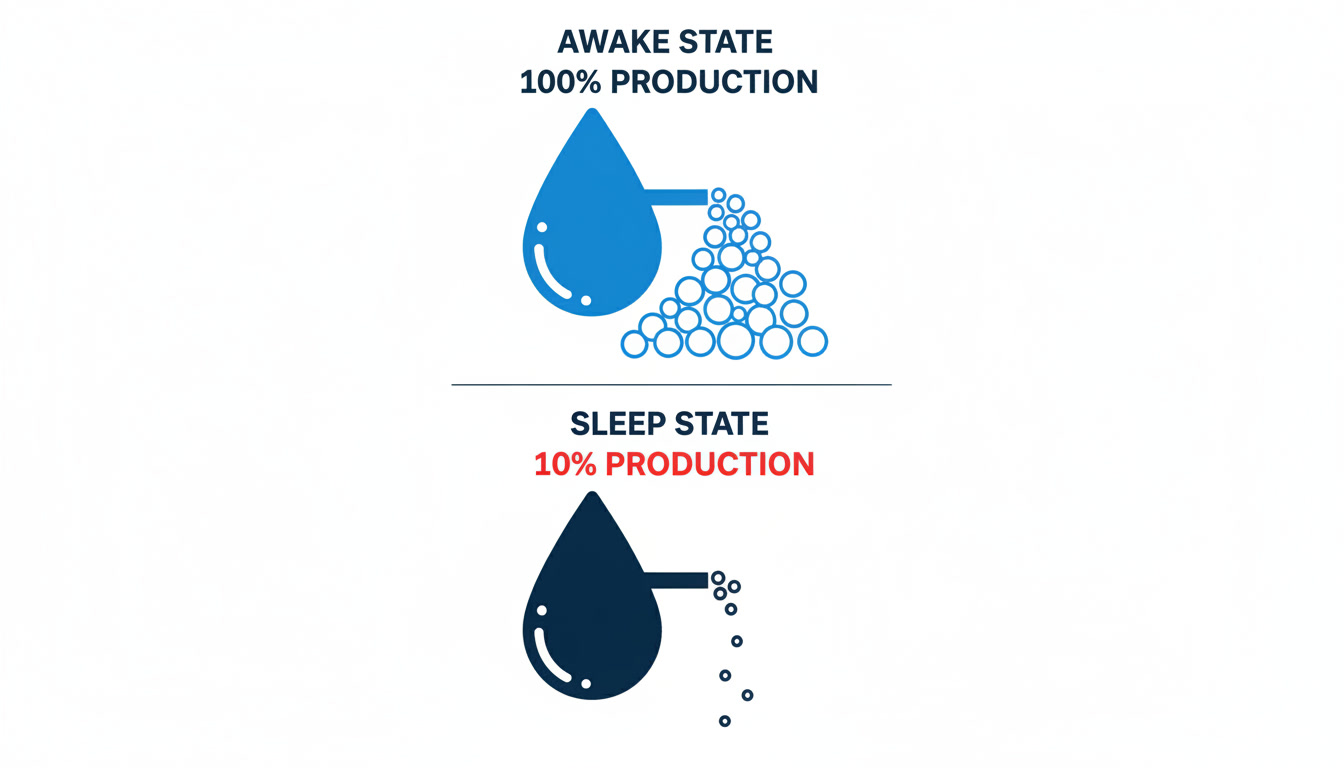
When you fall asleep, your body goes into conservation mode. Your salivary glands—which produce 0.5 to 1.5 liters of saliva per day while you’re awake—practically shut down.
Saliva production drops by up to 90% during sleep.
Why does this matter?
Because saliva is your mouth’s natural defense system. It’s not just spit—it’s a sophisticated antibacterial solution containing:
- Enzymes (like lysozyme and lactoperoxidase) that kill bacteria
- Oxygen that keeps aerobic (good) bacteria alive
- Minerals that neutralize acid and remineralize teeth
- Bicarbonate that maintains a healthy pH balance
When saliva flow stops, the bad bacteria start to win.

Hour 3-5: The Bacterial Feeding Frenzy
With saliva production at a crawl, the anaerobic bacteria—the ones that thrive in low-oxygen environments—begin to multiply exponentially.
These bacteria feast on:
- Dead cells from your tongue and cheeks
- Leftover food particles between your teeth
- Blood (if you have any gum inflammation)
- Proteins in your saliva
As they digest this biological debris, they release volatile sulfur compounds (VSCs)—the same chemicals that give rotten eggs their signature stench.
The three main culprits:
- Hydrogen sulfide (smells like rotten eggs)
- Methyl mercaptan (smells like decaying cabbage)
- Dimethyl sulfide (smells like sewage)
By hour 5, your mouth has become a sulfur factory.
Hour 6-8: The pH Collapse
As bacteria continue to feed and multiply, they produce acid as a byproduct.
Your mouth’s pH—which should sit around 6.5 to 7.0 (neutral to slightly acidic)—begins to plummet. Without saliva to buffer the acid, your oral environment can drop to a pH of 5.5 or lower.
At this pH level:
- Enamel begins to demineralize
- Bacteria reproduce faster
- The sulfur smell intensifies
- Your tongue develops a thick biofilm (that white/yellow coating you see in the mirror)
This is why your breath is at its absolute worst the moment you wake up.
Your mouth has been a low-oxygen, high-bacteria, acidic cesspool for 8 hours straight.
But Here’s the Thing: Morning Breath Shouldn’t Last Past 9 AM
If you brush your teeth, drink some water, and eat breakfast—your breath should return to baseline within 30-60 minutes.
Saliva production kicks back in. Oxygen floods your mouth. The pH rises. The bad bacteria retreat to their hiding spots in your gum pockets and tongue crevices.
Normal morning breath is temporary.
But if your morning breath lingers for hours—or if it returns within 2-3 hours of brushing—your body is waving a red flag.
Internal Research // Sector 7
What Your Morning Breath Is Trying to Tell You
Not all morning breath is created equal. The specific scent profile is often the first warning sign of a deeper biological imbalance.
🥚 Sulfur/Rotten Egg Smell = Bacterial Overgrowth
What it means: An overpopulation of anaerobic bacteria concentrated on the back of your tongue or in deep gum pockets.
Common causes: Poor tongue cleaning, gum disease, or chronic post-nasal drip feeding bacteria.
THE FIX: Tongue scraping every morning. A copper or stainless steel scraper removes the biofilm that toothbrushes can't reach.
🍋 Sour/Acidic Smell = Acid Reflux or GERD
What it means: Stomach acid is creeping up your esophagus at night and leaving residue in your throat and mouth.
Common causes: GERD, eating within 3 hours of bed, or sleeping flat on your back.
🚩 RED FLAG: If you have chronic heartburn or sore throat, consult a gastroenterologist.
🍬 Fruity/Sweet Smell = Ketoacidosis (URGENT)
What it means: Your body is producing excess ketones. This is a primary indicator of uncontrolled diabetes (DKA).
ACTION: If diabetic, check blood sugar immediately. If accompanied by nausea or confusion, seek emergency care.
💩 Fecal/Sewage Smell = Bowel or Sinus Issues
What it means: Chronic sinus infection drainage or, in rare cases, a bowel obstruction.
Common causes: Chronic sinusitis, infected tonsil stones, or post-nasal drip buildup.
🩸 Metallic Smell = Bleeding Gums
What it means: Iron in blood produces a metallic odor. This is a sign of gingivitis or aggressive brushing.
🐟 Fishy Smell = Kidney/Liver Issues
What it means: Kidneys or liver aren't filtering waste properly. Uremia causes an ammonia-like or fishy scent.
🚩 RED FLAG: If accompanied by jaundice or fatigue, see a doctor ASAP.

The 3-Step Morning Protocol That Resets Your Mouth (In Under 90 Seconds)
Here’s what you should do every single morning—before coffee, before breakfast, before anything else touches your lips:
Step 1: Tongue Scraping (30 seconds)
Use a copper or stainless steel tongue scraper—not your toothbrush.
Start at the back of your tongue (as far as you can without gagging) and pull forward with firm, even pressure. Rinse the scraper and repeat 5-7 times.
You’ll see the white/yellow biofilm come off. That’s the bacteria colony you’re removing.
Why it works: Removes up to 75% of VSC-producing bacteria in one session.
Step 2: Oil Pulling or Saltwater Rinse (60 seconds)
Option A: Swish 1 tablespoon of coconut oil for 60 seconds, then spit (not down the sink—it clogs pipes).
Option B: Rinse with warm saltwater (½ tsp salt in 8 oz water).
Why it works: Oil pulling pulls bacteria out of gum pockets. Saltwater raises pH and reduces inflammation.
Step 3: Brush After Breakfast (Not Before)
Wait 30 minutes after eating to brush. Eating stimulates saliva production and neutralizes the overnight acid. Brushing immediately after can damage softened enamel.
Why it works: Lets your mouth’s natural defenses kick in before you intervene mechanically.

When Morning Breath Is a Symptom, Not the Problem
If you follow this protocol and your breath still smells terrible by mid-morning, it’s time to dig deeper.
Here are the conditions that cause persistent bad breath, even with perfect oral hygiene:
Chronic Dry Mouth (Xerostomia)
Causes of dry mouth:
- Medications (antidepressants, antihistamines, blood pressure meds)
- Mouth breathing during sleep
- Dehydration
- Autoimmune diseases (Sjögren’s syndrome)
Solution: Stay hyperhydrated. Use a humidifier at night. Ask your doctor about switching medications.
Tonsil Stones (Tonsilloliths)
Those white, rice-sized chunks that smell like death? They’re calcified bacteria and debris trapped in your tonsil crypts.
Solution: Manual removal (carefully), saltwater gargles, or seeing an ENT for chronic cases.
Small Intestinal Bacterial Overgrowth (SIBO)
When bacteria colonize your small intestine (where they shouldn’t be), they produce gases that travel up through your digestive tract and out your mouth.
Solution: SIBO breath test, followed by antibiotics or herbal antimicrobials, plus dietary changes.
Gum Disease (Periodontitis)
If you have deep pockets between your teeth and gums (4mm+), bacteria are living rent-free below the gumline where your toothbrush can’t reach.
Solution: Professional deep cleaning (scaling and root planing), followed by meticulous home care.
The One Thing Most People Get Wrong About Morning Breath
Here’s the mistake 90% of people make:
They try to mask the smell instead of eliminating the bacteria.
Mints, gum, mouthwash—they’re all temporary cover-ups. And in many cases, they make the problem worse.
Alcohol-based mouthwash kills ALL bacteria (good and bad), dries out your mouth, and causes a rebound effect where bad breath comes back stronger 4-6 hours later.
Sugar-free mints stimulate saliva temporarily, but the artificial sweeteners (xylitol, sorbitol) can cause digestive issues that create… more bad breath.
Chewing gum works—but only if it’s sugar-free and you’re using it to stimulate saliva, not replace actual oral hygiene.
The real solution isn’t hiding the smell.
It’s resetting your oral microbiome so the smell never develops in the first place.
The 30-Second Discovery That Changed Everything
A few years ago, a microbiologist studying oral bacteria made an accidental discovery.
While testing natural compounds for a university project, he found a specific combination of five everyday foods that—when consumed in a particular sequence—neutralized VSC-producing bacteria on contact.
Not masked. Not temporarily reduced.
Neutralized.
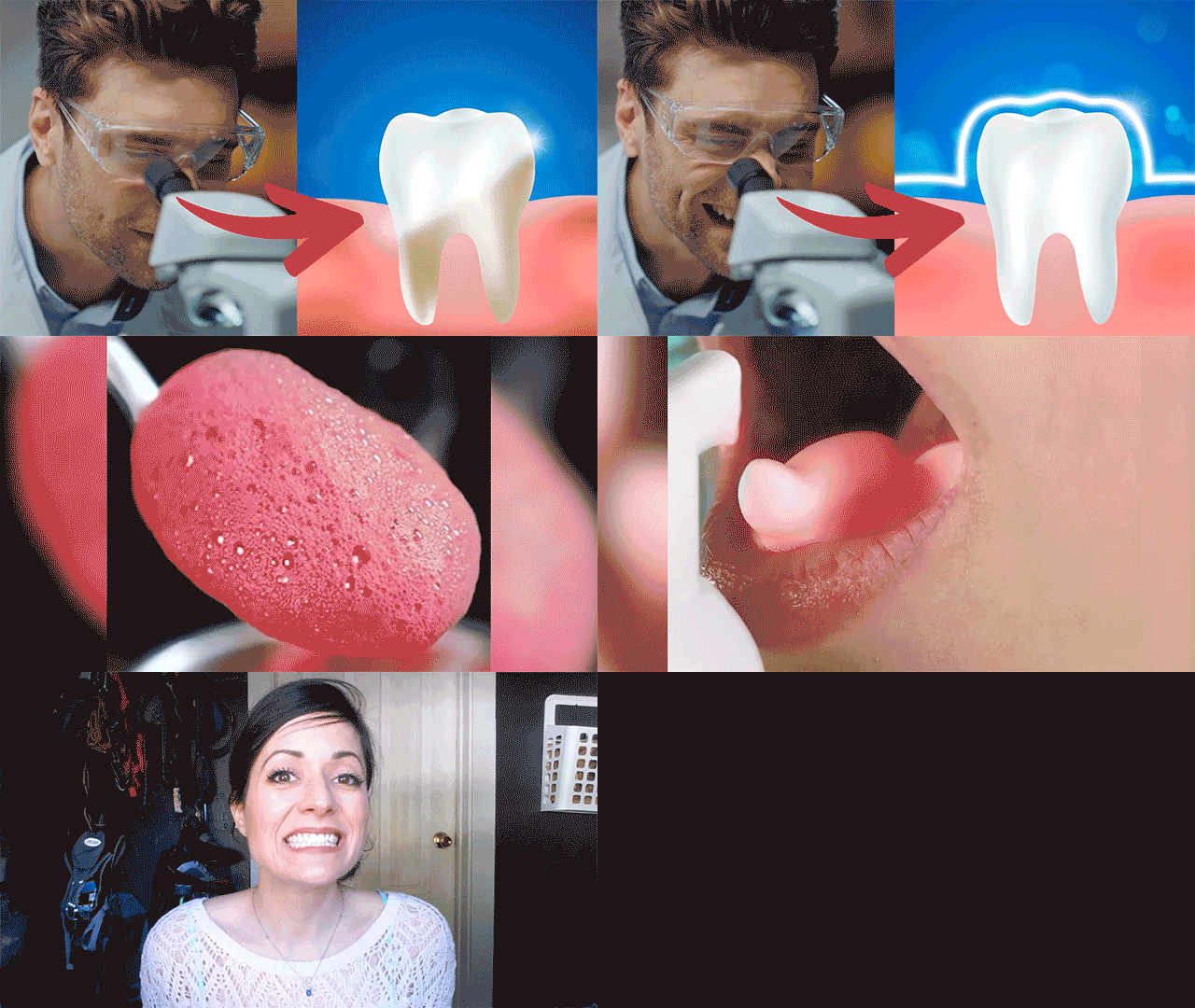
Within 30 seconds, the sulfur compounds in test subjects’ mouths dropped by 71%. The bacterial colonies responsible for morning breath were reduced by 63% within 6 hours.
The protocol was so effective that several test subjects reported their morning breath disappeared entirely within 7 days of consistent use.
No expensive probiotics. No prescription mouthwash. No dental procedures.
Just a 30-second morning ritual using ingredients you probably already have in your kitchen.
The study was never published (the researchers were pressured to shelve it—draw your own conclusions about why).
But the protocol leaked.
And the people who discovered it have been quietly using it ever since.
If you’re tired of waking up with a mouth that tastes like a dumpster…
If you’ve tried “everything” and still can’t shake the sulfur smell…
If your partner’s “subtle” morning distance is starting to hurt…
The Bottom Line
Morning breath is normal. But it shouldn’t define your first two hours of the day.
Your mouth is telling you a story every morning—through smell, taste, and texture.
Most people ignore it. They brush it off (literally) and move on.
But the people who pay attention—who ask why instead of just masking the symptom—are the ones who finally break free from chronic bad breath.
Because once you understand the biology, the solution becomes obvious.
And it’s been sitting in your kitchen this whole time.