
Yes. Extra gum contains xylitol.
But before you start chewing it for your oral health, there’s something important you need to know about how much xylitol is actually in it — and whether it’s enough to make a real difference.
Let’s get into it.
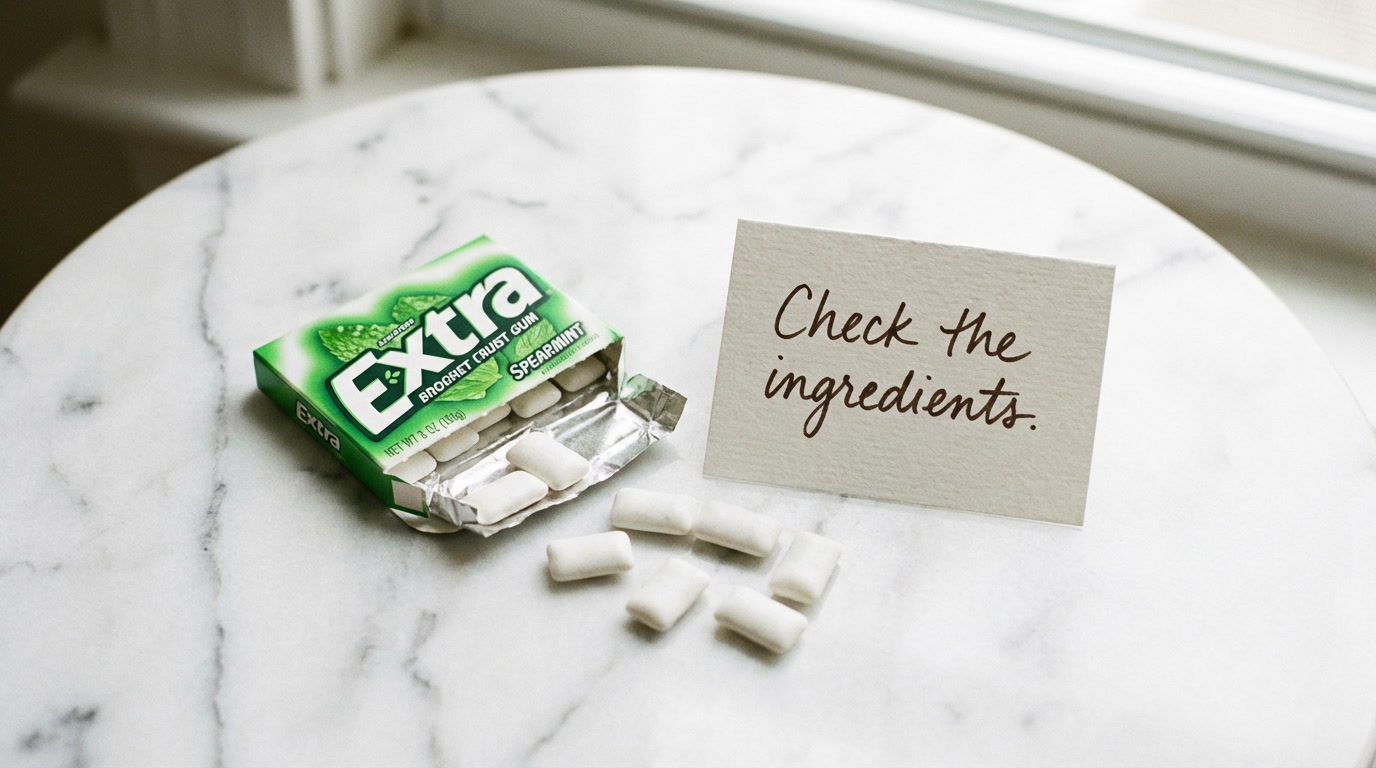
Extra Gum Ingredients
Extra gum does contain xylitol. But here’s the problem:
It’s not the first ingredient.
Flip the package over and you’ll see the ingredient list starts with sorbitol — a cheaper sugar alcohol that can still be partially fermented by harmful bacteria in your mouth.
Xylitol appears further down the list, meaning it’s present in smaller concentrations than sorbitol.
For casual gum chewing? That’s fine.
For genuine oral health benefits? It matters more than most people realize.
Why Ingredient Order Matters
Ingredients on any food or supplement label are listed in order of concentration — highest to lowest.
When sorbitol is listed first and xylitol appears third or fourth, you’re getting a product that’s primarily sweetened with sorbitol with xylitol added as a secondary ingredient.
Here’s why that’s relevant:
The oral health benefits of xylitol — starving cavity-causing bacteria, preventing plaque adhesion, supporting remineralization — are dose dependent. Studies showing meaningful benefits used 5-10 grams of xylitol daily.
If xylitol is a secondary ingredient in your gum, you’d need to chew significantly more pieces to approach that therapeutic range.
That’s not necessarily a dealbreaker. But it’s something worth knowing before you assume your Extra gum habit is doing the heavy lifting for your oral health.
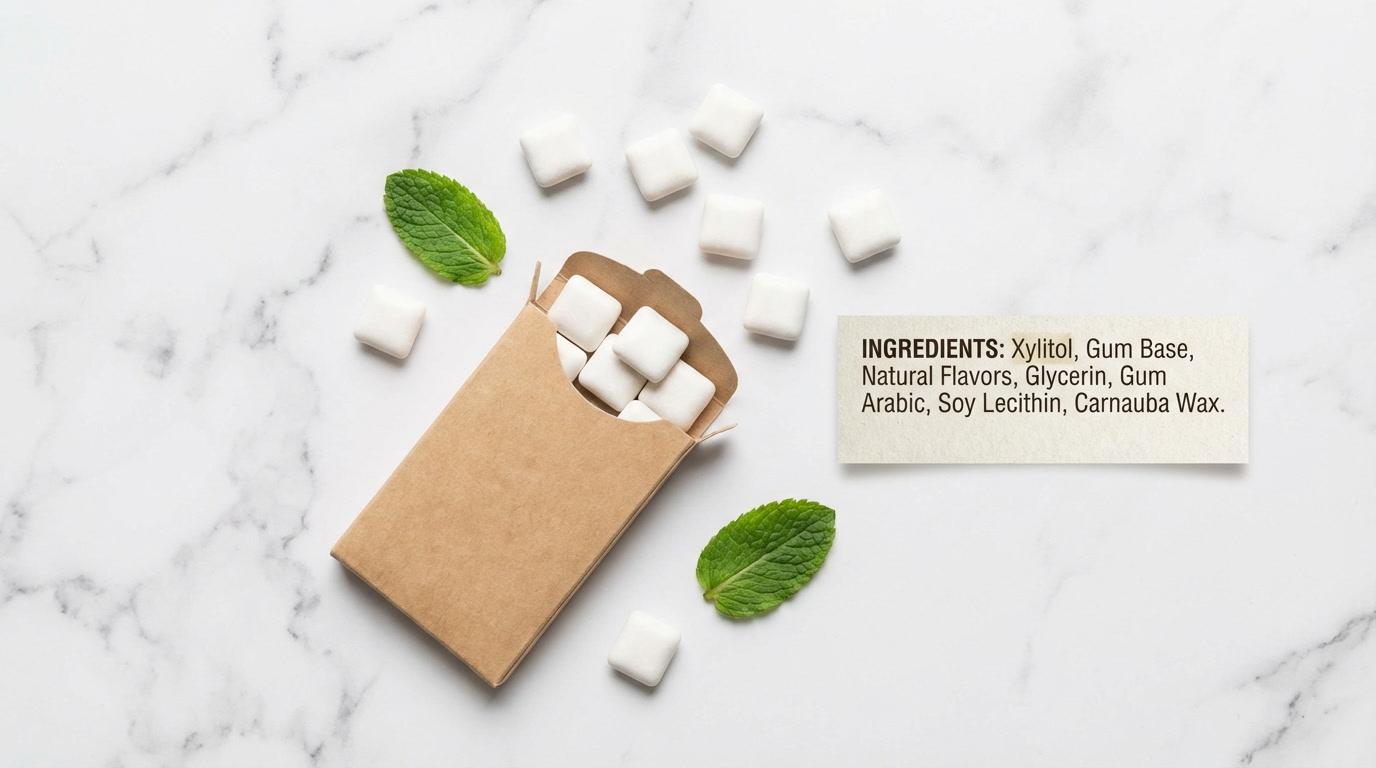
How Does Extra Gum Compare to Other Xylitol Gums?
Not all xylitol gums are equal. Here’s a simple way to think about it:
Tier 1 — Pure Xylitol Gums: These list xylitol as the first and primary ingredient. Every piece delivers a meaningful xylitol dose. Brands like Spry and PUR gum fall into this category. These are your best options if oral health is the goal.
Tier 2 — Mixed Sweetener Gums: These contain xylitol alongside other sugar alcohols like sorbitol. Extra gum falls here. Still better than sugar-sweetened gum, but the xylitol concentration is lower.
Tier 3 — Trace Xylitol Gums: These use xylitol as a marketing ingredient with negligible amounts. Essentially useless for oral health purposes.
Extra gum sits solidly in Tier 2. Better than most gums on the market. But not the most effective option if oral health is your primary goal.

So Should You Chew Extra Gum?
Honestly? It depends on your goal.
If you’re looking for a better-than-sugar gum option — Extra is a reasonable choice. It’s widely available, affordable, and contains some xylitol alongside sorbitol. It’s not going to harm your teeth the way sugar-sweetened gum would.
If you’re specifically trying to use xylitol for oral health benefits — you’d be better served by a pure xylitol gum where xylitol is the primary ingredient. You’ll hit your daily target faster and more reliably.
If you’re already chewing Extra and wondering if it’s enough — it’s a start. But pairing it with other xylitol sources throughout the day would help you reach the 5-10 gram daily range where the research shows real benefits.

How to Get the Most Out of Xylitol Gum
Regardless of which xylitol gum you choose, how you use it matters just as much as which one you pick.
Chew after every meal — harmful bacteria are most active right after eating. This is when xylitol disrupts their activity most effectively.
Chew for at least 5 minutes — this maximizes both xylitol exposure and saliva stimulation.
Aim for 3-5 exposures daily — frequency is everything. One piece in the morning won’t move the needle on its own.
Look for pure xylitol options when possible — the closer to 100% xylitol sweetened, the more effective each piece becomes.
The Bigger Picture
Here’s something worth understanding beyond the gum aisle:
Xylitol — regardless of delivery method — works by reducing harmful bacteria in your mouth. It creates a less acidic environment. It supports saliva production. It helps prevent plaque from sticking to your teeth.
These are all genuinely valuable things.
But your oral health is an ecosystem. And reducing harmful bacteria is only one part of maintaining that ecosystem long term.
The other part — one that gum alone can’t address — is actively supporting the beneficial bacteria your mouth needs to stay naturally balanced.
When both sides of that equation are addressed simultaneously, the results go beyond what xylitol gum can deliver on its own. Fresher breath that lasts. Gums that feel genuinely healthier. A mouth that stays balanced naturally.
If you want to go beyond gum and explore what a complete approach to oral health looks like, we’ve put together something worth reading.