Here’s something that surprises most people:
The sweetener sitting in your gum wrapper might be doing more for your teeth than your toothpaste.
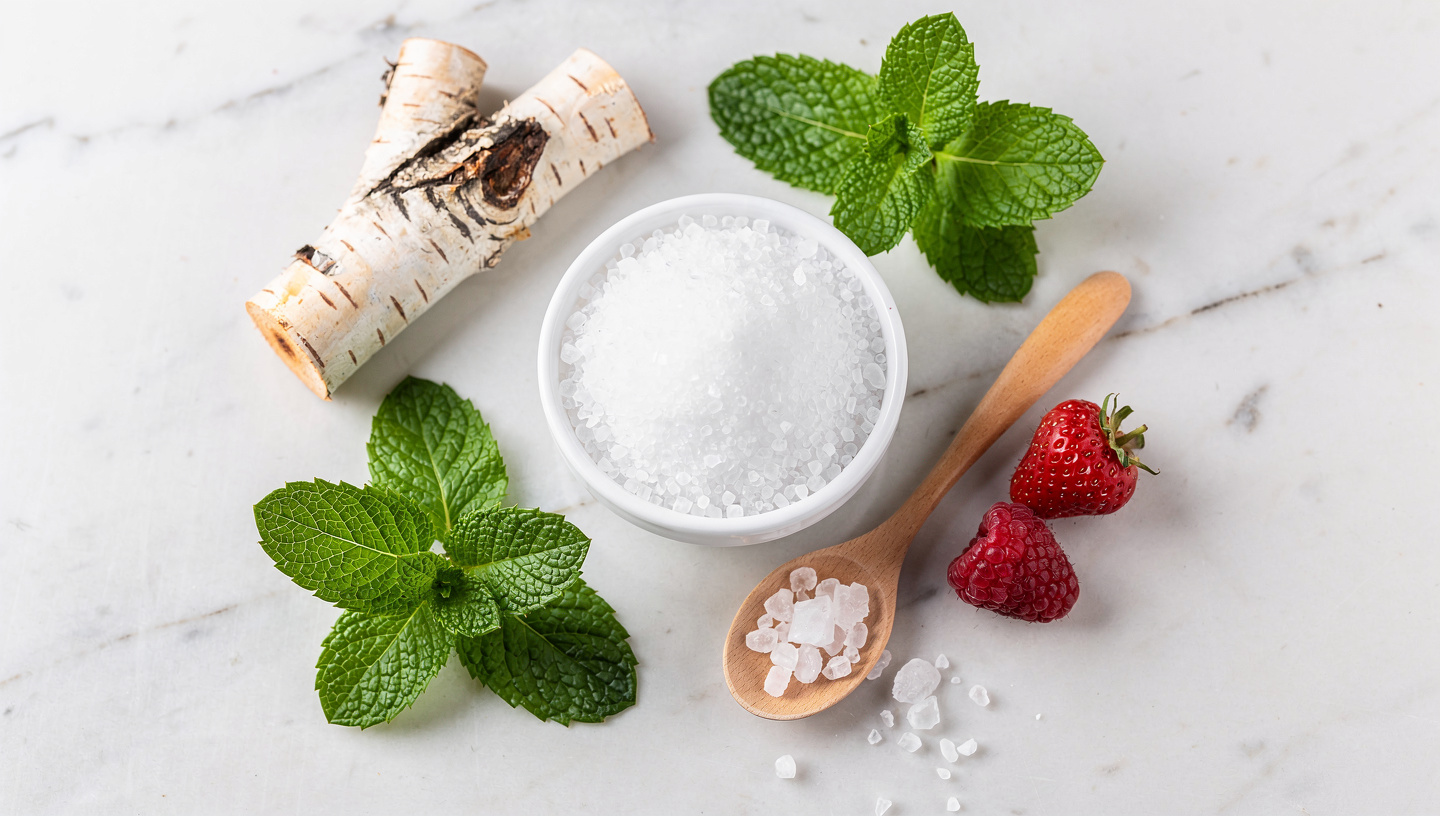
Xylitol—a natural sugar alcohol found in fruits, vegetables, and birch bark—has been quietly revolutionizing oral health for decades. Dentists know about it. Researchers have studied it extensively. Yet most people still reach for antibacterial mouthwash and hope for the best.
If you’ve been dealing with persistent bad breath, sensitivity, or teeth that just never feel truly clean—keep reading.
Because xylitol works differently than anything else in your oral care routine. And once you understand how, you’ll never look at a stick of gum the same way again.
Xylitol is just the beginning. Ready to see the full picture? Click here to discover the complete oral health solution here.
What Is Xylitol for Teeth?
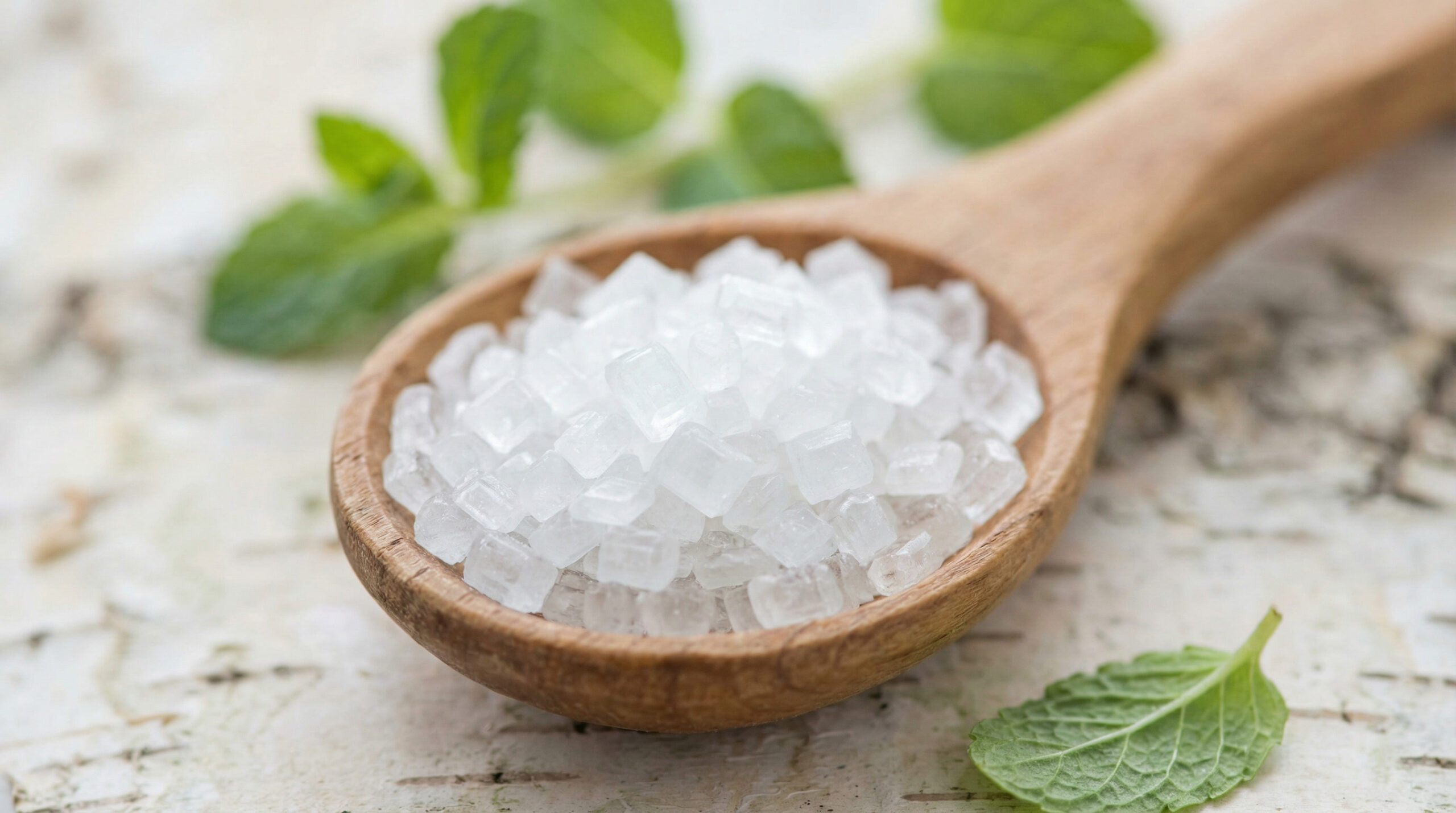
Xylitol is a naturally occurring sugar alcohol that looks and tastes like regular sugar—but behaves completely differently inside your mouth.
Regular sugar feeds harmful bacteria. Those bacteria produce acid. That acid destroys enamel and causes cavities.
Xylitol breaks that cycle entirely.
When harmful bacteria try to consume xylitol, they can’t metabolize it. They can’t produce acid from it. They essentially starve—and over time, their populations in your mouth significantly decrease.
That’s the foundation. Now here’s where it gets interesting.
7 Proven Benefits of Xylitol for Teeth
1. Xylitol Starves the Bacteria That Cause Cavities
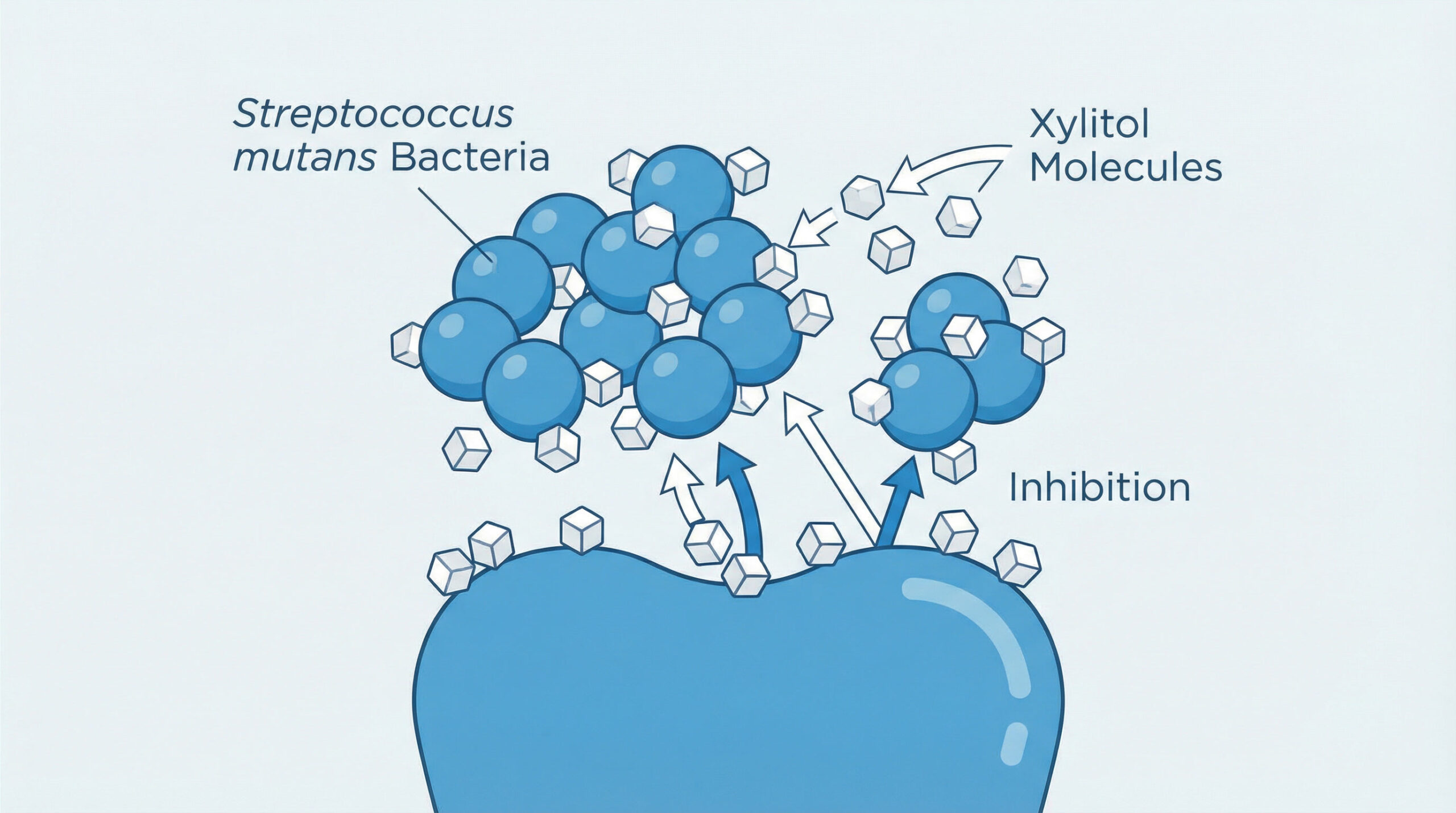
The primary villain in tooth decay is Streptococcus mutans—a bacteria that feeds on sugar and produces enamel-destroying acid as a byproduct.
Xylitol is that bacteria’s worst nightmare.
When S. mutans tries to consume xylitol, it can’t ferment it for energy. It wastes resources trying to process something it simply cannot use. Weakened and starving, the bacteria population shrinks.
Studies show that using xylitol consistently—5 to 10 grams daily—can dramatically reduce S. mutans populations in your mouth. Some research suggests this reduction can become permanent with long-term use.
You’re not just cleaning your teeth. You’re changing the bacterial landscape entirely.
What if one simple daily habit could transform your oral health from the inside out? Find out what the research points to.
2. Xylitol Prevents Plaque From Sticking to Your Teeth
Here’s something your toothbrush can’t do: stop plaque from forming in the first place.
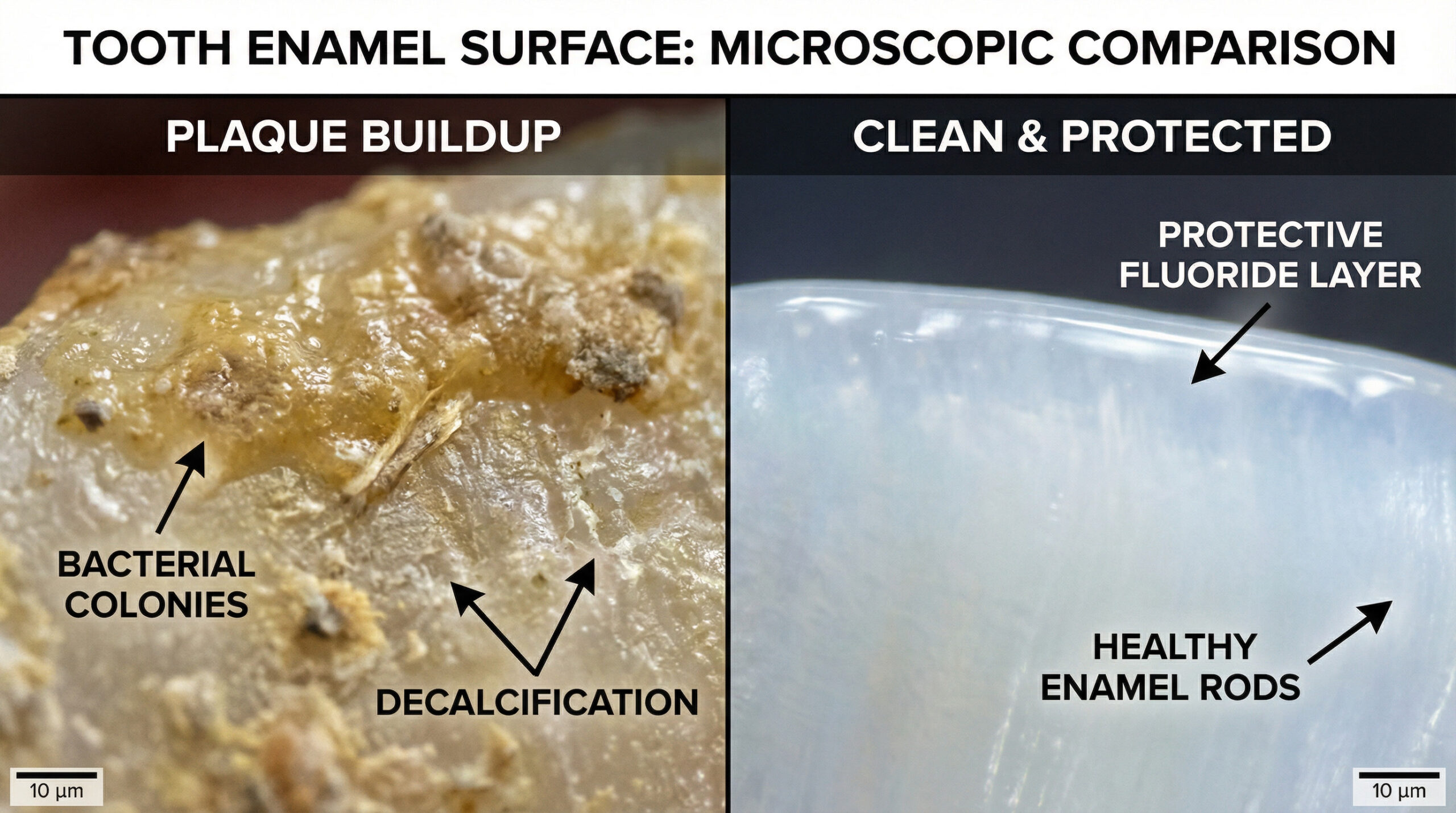
Plaque isn’t just loose bacteria floating around. It’s bacteria that have anchored themselves to your tooth surfaces and built protective colonies.
Xylitol interferes with this process. Research indicates it inhibits bacteria from adhering to tooth surfaces as effectively—which means less plaque accumulation overall.
Less plaque means less decay. Less gum irritation. And a cleaner-feeling mouth that actually lasts between brushings.
This is one of the most underrated benefits of xylitol for teeth and gums—it’s working preventively before problems even start.
3. Xylitol Supports Natural Enamel Remineralization
This is where xylitol goes from impressive to remarkable.
When you chew xylitol gum or use xylitol products, your mouth produces more saliva. That saliva is rich in calcium and phosphate—the exact minerals your enamel needs to repair and strengthen itself.
This process is called remineralization. And it means xylitol isn’t just preventing damage—it’s actively supporting repair.
Early-stage weak spots in your enamel can be strengthened. Small areas of decay can be addressed before they become major problems.
This is why knowing the best way to use xylitol for teeth matters: chewing xylitol gum after meals maximizes saliva production and delivers minerals directly to your enamel when it needs them most.
Your mouth deserves more than surface-level care. See what complete oral balance looks like.
4. Xylitol Creates a Less Acidic Oral Environment
Acid is the enemy of healthy teeth.
Every time you eat or drink something sugary, the bacteria in your mouth produce acid that drops your mouth’s pH below safe levels. Your enamel starts to soften. Over time, this repeated acid exposure leads to decay.
Since xylitol can’t be fermented by harmful bacteria, it doesn’t trigger acid production.
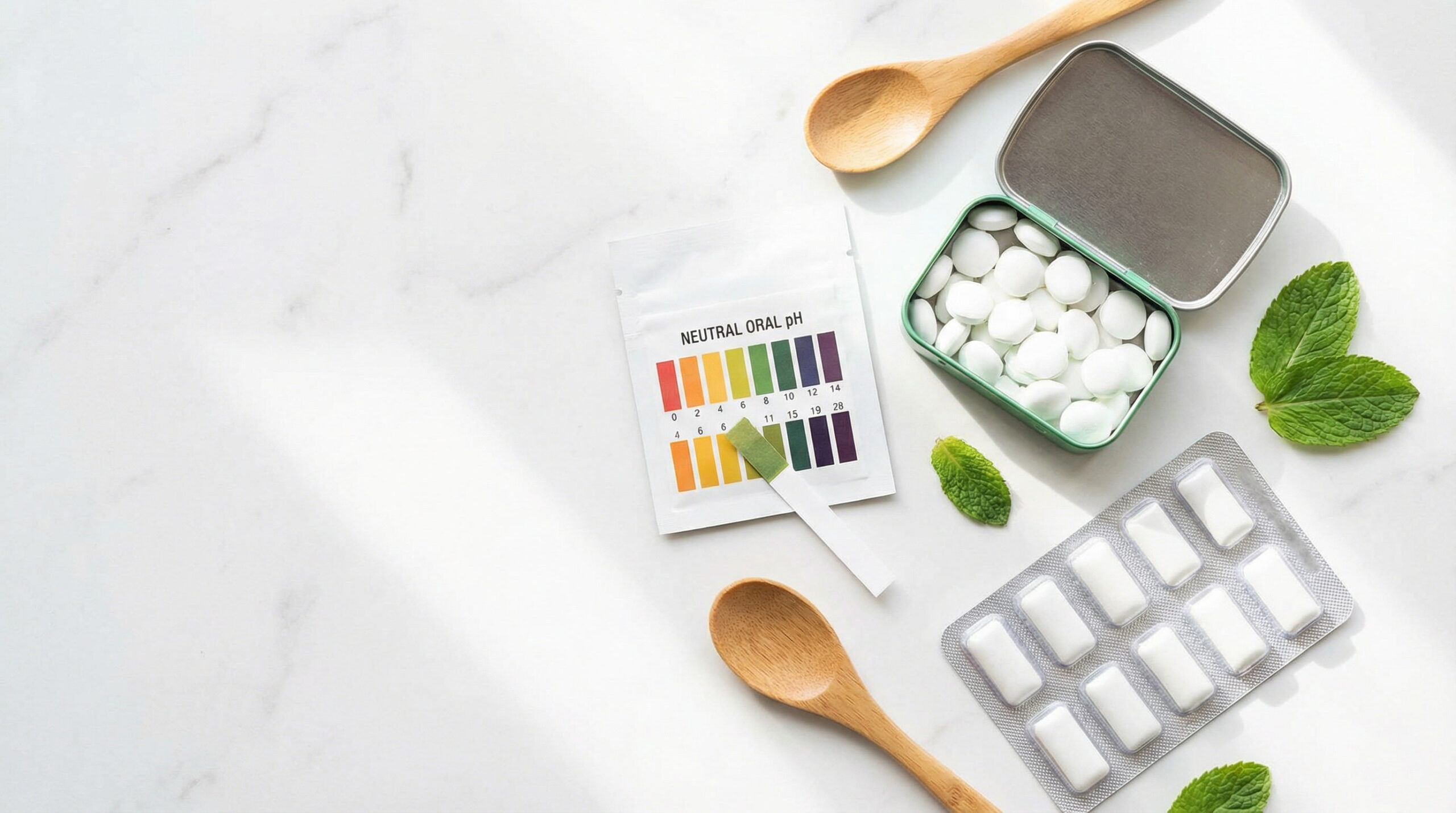
Substituting sugar with xylitol—even partially—helps maintain a more neutral pH in your mouth. Less acid means less enamel erosion. Less erosion means healthier teeth long-term.
For people who struggle with sensitivity, this shift in oral environment can make a noticeable difference.
5. Xylitol Supports Healthier Gums
Most conversations about xylitol focus on cavities. But the benefits of xylitol for teeth and gums extend further than most people realize.
By reducing plaque buildup—one of the primary triggers of gum inflammation—xylitol helps support healthier gum tissue overall.
Less plaque accumulation means less bacterial irritation along the gum line. Less irritation means less inflammation. And less inflammation means gums that look and feel healthier.
For anyone dealing with sensitivity along the gum line or gums that bleed easily when brushing, addressing plaque at the source is a meaningful first step.

6. Xylitol Supports Fresher Breath Naturally
Here’s something most people don’t connect:
Bad breath isn’t primarily about what you ate for lunch. It’s about bacteria producing sulfur compounds in your mouth—particularly the bacteria that thrive when your oral environment is out of balance.
By reducing harmful bacterial populations and creating a less hospitable environment for odor-causing bacteria, xylitol supports fresher breath from the inside out.
Not by masking the problem like mints or mouthwash do. But by addressing one of the root contributors to chronic bad breath.
This is why using xylitol for teeth health is about more than just cavities. It’s about creating a genuinely balanced oral environment.
Tired of fresh breath that only lasts two hours? Discover what’s actually missing from your routine here.
7. Xylitol Is Safe, Natural, and Well-Researched
Unlike harsh antibacterial agents that indiscriminately kill everything in your mouth—good and bad bacteria alike—xylitol works selectively.
It targets harmful bacteria without disrupting beneficial bacteria your mouth needs to stay balanced.
Decades of research back its safety and effectiveness. It’s approved for use in toothpaste, gum, mints, and oral care supplements. It’s safe for children and adults alike.
The only notable consideration: introduce it gradually. High amounts consumed quickly can cause temporary digestive discomfort for some people. Start with smaller amounts and increase over time.
And one critical note for pet owners: xylitol is extremely toxic to dogs. Store all xylitol products securely away from pets.
How to Use Xylitol for Teeth Effectively
The research is clear on this: frequency matters more than total amount.
Aim for 5-10 grams daily, spread across 3-5 uses—ideally right after meals when harmful bacteria are most active.
Best forms to use:
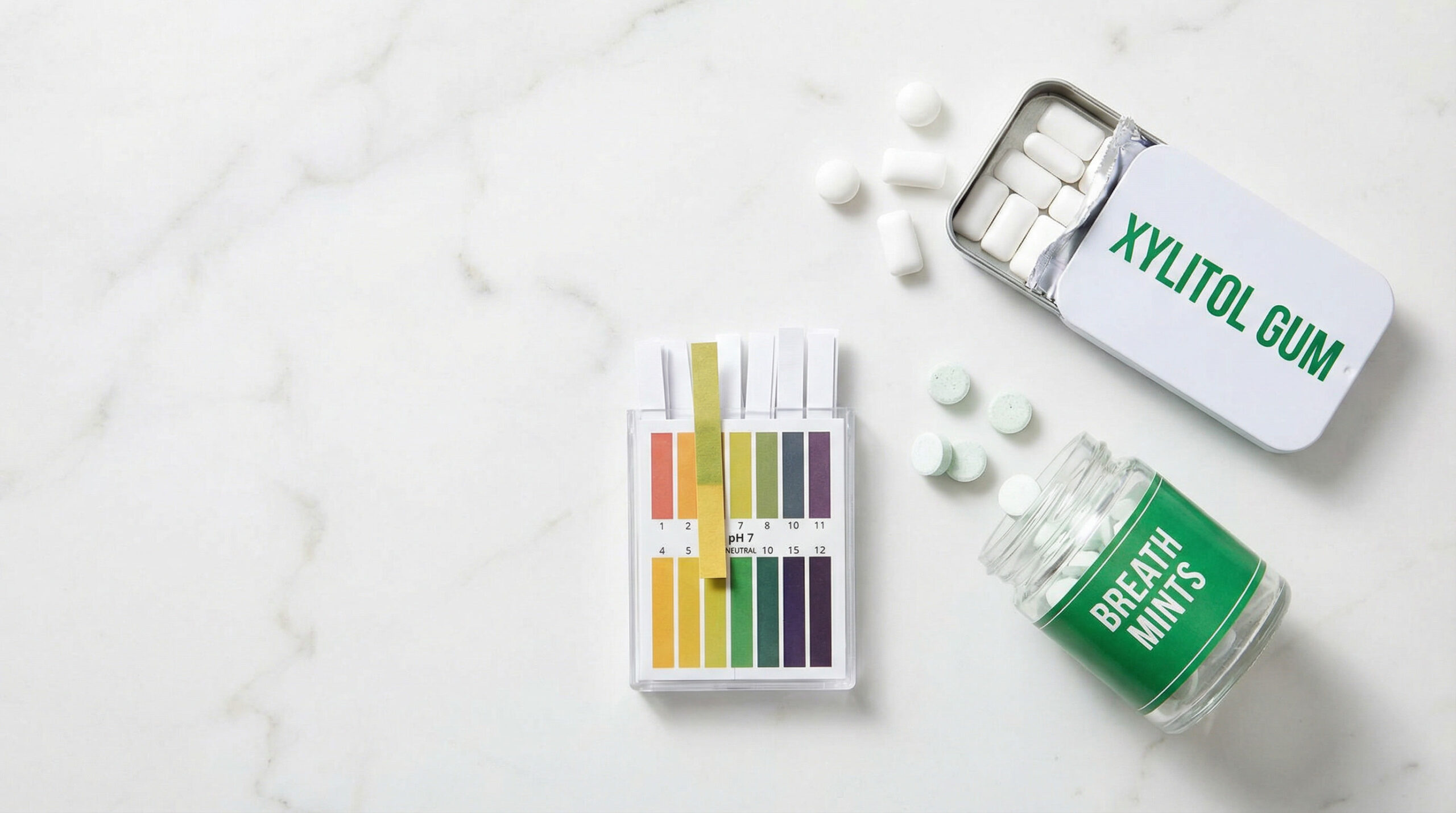
Xylitol Gum — Chewing stimulates saliva production while distributing xylitol throughout your mouth. One of the most effective delivery methods.
Xylitol Mints — Convenient, portable, and effective when dissolved slowly.
Xylitol Toothpaste — Adds xylitol exposure to your existing brushing routine without changing habits.
Granular Xylitol for Teeth — Can replace sugar directly in coffee, tea, or cooking for consistent daily intake.
The best way to take xylitol for teeth is whichever method you’ll actually use consistently. Consistency beats perfection every time.
Still brushing twice a day and wondering why nothing changes? See what thousands are doing differently
Xylitol vs Other Sweeteners
Quick note for those comparing options:
Sorbitol vs xylitol for teeth — Both are sugar alcohols, but xylitol has significantly more research supporting its oral health benefits. Sorbitol can still be partially fermented by bacteria, meaning it can still contribute to acid production. Xylitol cannot.
Stevia vs xylitol for teeth — Stevia is a good sugar alternative that won’t feed harmful bacteria. But it doesn’t have the same active oral health benefits as xylitol. Stevia is neutral. Xylitol is protective.
If oral health is your goal, xylitol is the clear choice.
Here’s the Part Most Articles Miss
Everything above is true. Xylitol is genuinely remarkable for oral health.
But here’s what the research is now revealing:
Xylitol reduces harmful bacteria. What it doesn’t do is actively support the beneficial bacteria your mouth needs to stay balanced long-term.
Think of it this way:
Xylitol clears the battlefield. But something needs to move in and hold the ground.
That’s where your oral microbiome comes in.
Your mouth has its own ecosystem of bacteria—some harmful, some essential. When beneficial bacteria are thriving, they naturally crowd out harmful ones, support gum health, and maintain the fresh breath that xylitol helps create.
The people seeing the most dramatic and lasting improvements in their oral health are combining xylitol with targeted probiotic strains that support beneficial bacteria—along with ingredients like cranberry extract that help prevent bacterial adhesion to oral tissue.
Xylitol creates the right environment. Probiotics populate it with the right bacteria.
Together, they don’t just manage oral health. They transform it.
The Bottom Line
Xylitol is one of the most well-researched, genuinely effective tools available for oral health.
Used consistently—5-10 grams daily across 3-5 uses—it reduces cavity-causing bacteria, prevents plaque adhesion, supports remineralization, and contributes to fresher breath naturally.
But for the complete picture, pair it with probiotic support that actively reinforces the beneficial bacteria your mouth needs to stay balanced.
That’s not just oral care. That’s oral health from the inside out.
Ready to experience what complete oral balance actually feels like?